


Show Notes
Every business has problems. You can't fix them all at once. But most business owners don't have a system to capture what's broken—so they walk past the same problems every day without seeing them.
Scott introduces the concept of frictions: the little annoyances throughout the day. "I have to do this one more time." The moments that slow you down, slow your team down, and impact the customer experience.
The system is simple: Post-it notes. A wall. Make it a game. For remote teams, use a virtual whiteboard. Call them friction points—for every one your team submits, they get friction points. Fight for simplicity. Don't vibe code some fancy tool. You're just creating more friction.
Where frictions hide: email, Slack, repeated questions, manual triggers, things you've trained over and over but still answer yourself.
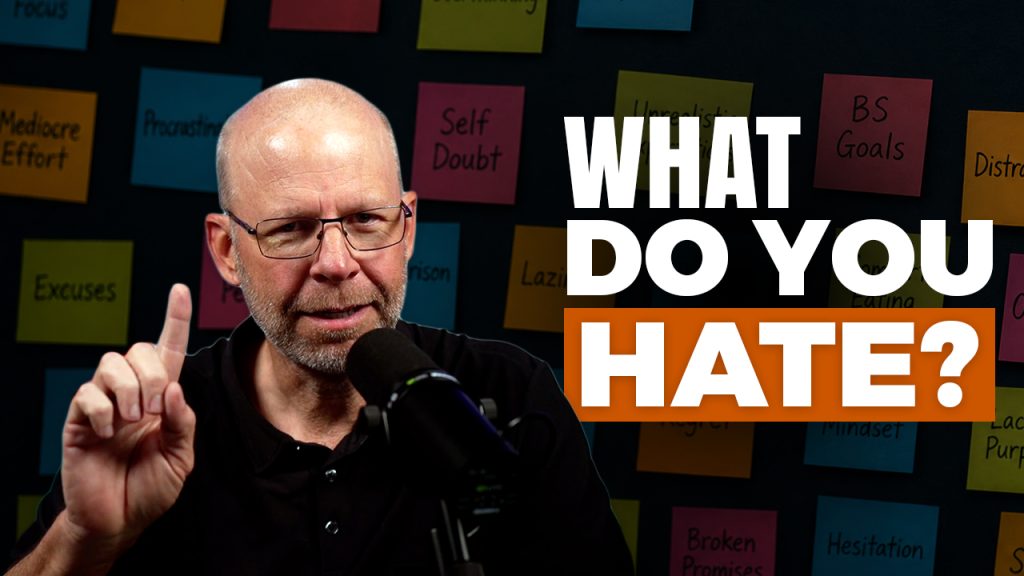
Ask your team every day: "What do you hate doing?" First time, they'll think you're crazy. Ask anyway. What's annoying you? What system is broken?
Scott shares the open gate story from his VP days at a rental car company. Cars were being stolen. Walking the lot after hours, the gate was open. The manager walked right past it. Scott stopped. "Why is that gate open?" The manager said maybe someone's working inside. Scott said maybe they're not—let's go check. We train ourselves to walk past problems. Frictions hide because we stop seeing them.
But not everything should be fixed. Prioritize by impact. Look at the wall of Post-it notes and find the one that, if fixed, fixes everything else.
The bottom line: Grab a Post-it note right now. What's annoying you about your business? Dedicate time every day to capturing frictions. Make it a game. You'll be further down the road of improvement than you ever imagined—if you stop walking past the open gate.
Got a business question? Ask Scott here: scotttodd.net/ask
📜 Full Transcript (Click to expand)
Every business has problems. My business does, yours does. And what we do in this show is about just that, solving problems so that you can grow your business. But here's the challenge. While you might want to fix everything at one time, you can't. And in this episode, we will discuss the one thing, the one thing.
that you need to make sure that you put into your business so that you know exactly what to fix next. Welcome to Fix My Business. I'm your host, Scott Todd. And well, after rising to the ranks of a Fortune 300 company, I left corporate America and I have built multiple seven figure businesses. And this show is here to help you do the same thing so that you can scale your business into whatever it is that you want. Now,
Here's the thing, when we talk about problems in a business, the one thing that we really need to think about is this one concept of a friction. Okay. I call it frictions and where the frictions occur is where problems exist in your business and they're little things. can be little annoyances that you see throughout the day.
that little annoyances in the work that you do, you're like, I have to do this one more time. And look, back when I started my business and I wasn't really focused on technology and it was just me, the one thing that I did is I always had this rule that said, I know it's time to outsource this function or this job when I couldn't stand to do it anymore.
And then as I started getting team members in place, the one thing that I realized is that I still had these friction points. There's still little things that came back to me all the time. And what I really wanted to then do is to now begin to capture those friction points of the things that just drive me crazy. So that's the friction, right? And so what we need is, what we really need is a system in order to capture these. And it's easy.
to overthink this. It's easy to try to put in some sophisticated system, but the reality is, that the one system that will work through all time is the simple systems. Now, when I talk about systems, a lot of people think, man, I gotta go like create this big fancy process. No, a simple can be, a system can be as simple as a Post-it note, for example. Okay, I use these things all day long. I see something, I write it down.
What I would encourage you to do is to make it a game, not just for you, but for your team. How many friction points can you find? How many things annoy you about the work that you do? Have them capture it on Post-it notes. Put them on the wall, collect them, make artwork out of it. And if you're like, wait a minute, Scott, I've got a whole remote team. How am I going to do that? Simple, grab your favorite online whiteboard tool that you can
put on virtual Post-it notes, put those things on there and make it a game. Call them friction points, okay? Like for every one they submit, they get friction points. Because what you're looking to do is you're looking to capture all these things within the business that are flaws. You're looking to capture all of these annoyances within the work that you do because they slow you down, they slow your team down.
And they also can impact the customer experience. Okay, like they can impact the customer experience and we'll talk about that later. But they're hiding, these friction points are hiding within your business. You can find them, I mean, you could probably rattle off things that, you know, annoy you about your business, but you can find them in your email. Okay, if you use Slack, they're sitting there in Slack and they come in the form of repeated questions.
⁓ things that maybe you've trained over and over and over and over again, but yet you're still somehow the Google of your business. That's a problem. If you're still answering questions after you've trained people, we've talked about it on this show about kind of the three reasons why work doesn't get done. in the archives, but that's the thing is that we can go in there and we can really begin to think about what annoys us in our job.
What are some of the manual triggers that exist in the last podcast I talked about triggers and how when we build our systems, we want to think about automating these triggers. Okay. So what manual triggers exist? Where are you still having to remember things? These are friction points. Okay. And you cannot do this alone. ⁓ Most people who watch and consume this show have a team.
Might be a remote team, it might be an in-house team, it doesn't really matter. But this whole thing of frictions and finding them and capturing them, it's a team sport. You should not be doing this alone. You should engage your team and say, look, we need some system in order to capture these things. And again, I'm going to argue again, I've already said it, I'm going to do it again on purpose. Fight for simplicity. Okay.
Don't go try to vibe code some system or tool or website. Don't do it. Make it, cause you're creating more friction. Okay. We don't want to do that. So ask your team, ask them, what do you hate doing? First time you ask them, they're to think you're crazy. Cause they're going to think, my gosh, if he asked me what I hate doing, he must be trying to get rid of me. No, no, no, no. You got to ask them, ask them every day. What do you hate doing? What's annoying you today? What system is broken? What process is broken?
If you and your team dedicate yourselves to becoming these friction scouts and you celebrate every time you're writing one down and you're celebrating every time you're posting on the wall, you'll be amazed at what happens to your business just simply by uncovering and unhiding these things. And I'm not even talking about fixing them yet. I'm just talking about the mere fact that you're capturing these things is
groundbreaking for your business. will move you in a direction that you cannot even see today. And it really thinks, it starts with the fact that you have to be curious about what's going on in your business. And you can't just sidestep over things. When I was at the corporate 300 company, I worked for a rental car company. I was a VP and I had been asked to go out and try to
look at what was happening within this one part of the operation. in this particular case, cars were being stolen. And it wasn't really for me to worry about that. That was corporate security. But while I was there, I was looking at another problem. And I knew about the cars being stolen. And I'm walking with a manager. And it's after hours. And we're walking the lot.
and the gate is open. And he walks by the gate and I said to him, I'm like, hey, question, why is that gate open? Shouldn't it be shut? And he's like, well, yeah, it should be shut. now remember, we just walked by this gate that should be shut. And I had to prompt him, shouldn't that thing be shut? And he's like, yeah. I'm like, well, why isn't it? And he goes, well, maybe.
somebody's in there working. And I'm like, well, you might be right, but maybe somebody's not in there working. And we should go investigate because if nobody's in there, then we should be shutting the gate. You see, it's easy to ⁓ it's easy to walk by and step by all of these things. OK, it's easy to just keep moving on with our day.
and never stop to capture the annoying parts of the day. But when we prioritize the capturing of these things, now we're basically showing where all of the difficulties in the business are, and we can't unsee those anymore. We can't not see it. And now we have an obligation to capture it, and we have an obligation to potentially fix it.
I say potentially fix it because not everything should be fixed. Not everything is big enough to be fixed. There's all of these problems that exist in businesses that while the solution might be super small and super easy and possible, it's not the biggest thing and it probably will never be the biggest thing because you have to allocate your resources to the changes
that will make the biggest impact. You have to find the ones that will make the biggest impact. Move the biggest part of the needle. Remove the biggest obstacle. Because when you're doing these things, when you're looking at that wall board of these Post-it notes, and you're like, this is the one that's the big one. If we fix this, then we fix these other things. See, now you're helping to prioritize what you're working on next in your business.
That's the important piece, something that you need to put into practice in your business. And what I want you to do is I want you to go and I want you to capture your first friction right now. Grab a post-it note, grab a piece of paper, grab whatever's in front of you, an index card, anything. What's annoying you right now about your business? And dedicate time every day to capturing these things, make it a game, have fun with it. And you will be down the road, further down the road,
of improving your business than you would ever have imagined if you just kept walking by the open gate. If you have a business question, I want to help you answer it and navigate through it. You can head over to scotttodd.net forward slash ask. I read every single submission and I will see you in our next episode.