


Show Notes
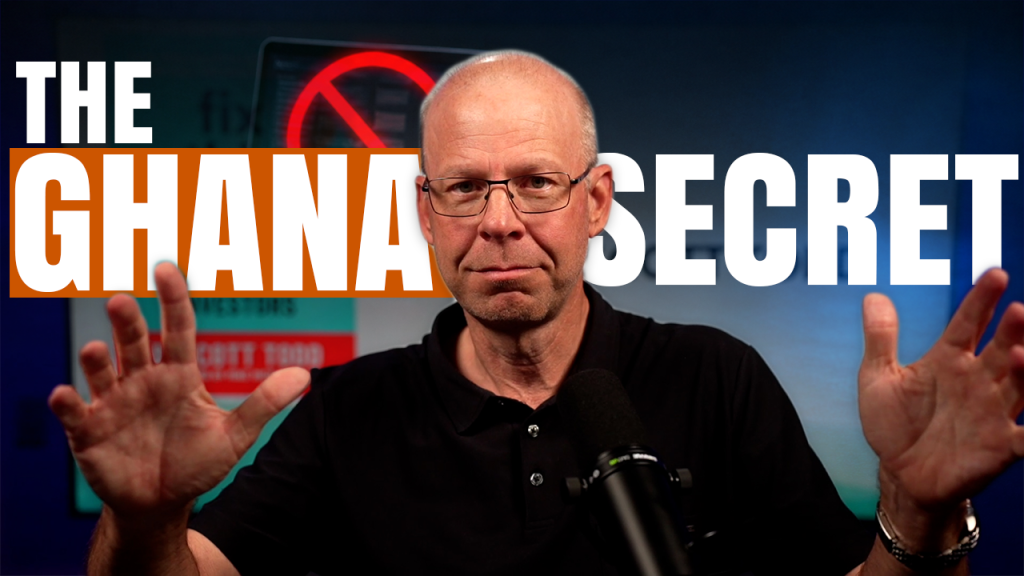
A woman takes a four-week vacation to Ghana. No laptop. The room erupts in applause. Scott sits there thinking: "Is this what we're celebrating now? Taking a vacation?"
But here's the reality: 67% of small business owners check in on work during vacation. 14% only take a vacation every two to three years. Their health is suffering. And the question is why.
The answer: They're the bottleneck. The business is too reliant on them. They're in the Control Trap.
The lie you tell yourself: "I'm not a control freak. I'm just maintaining quality."
The five symptoms: Your team asks questions they should know. You can't vacation without checking your phone. You're the only one with passwords and access. You delegate then redo. You think "if something happened to me, this would collapse."
The real question: Not "how do I delegate more?" but "why does everything come back to me?"
The answer: Your standards live in your head. Your team comes to you because you're the path of least resistance.
What the Ghana woman did differently: She trained her team on decisions, not just tasks. They knew her criteria. They didn't need her.
The three-part escape:
- Define what winning looks like (outcomes, not steps)
- Teach them to think, not just do (under what circumstances would you do X?)
- Remove yourself as the path of least resistance
The trick: When they ask a question they should know, say "I don't know. What do you think we should do?"
The catch: It feels like losing control. They will mess up. That's fixable. Don't jump back in.
The key insight: All businesses scale because you get more people thinking.
Your action: Pick one thing that requires your approval. Define what winning looks like. Next time someone asks, say "What do you think?"
Got a business question? Ask Scott here: scotttodd.net/ask
📜 Full Transcript (Click to expand)
I was at a meeting with other entrepreneurs when one of the attendees stood up and shared that she had just returned from a four week summer vacation to Ghana. She was so happy. She was raving about the memories her family made. And then she said something that made the room erupt in applause. She said she didn't take her laptop with her and everyone in the room started clapping.
like she had just announced she cured a disease. Now, I'm sitting there and I'm thinking, wait a minute, is this what we're celebrating now? Taking a vacation? Shouldn't that be the norm? But here's the reality. Research shows that 67 % of small business owners check in on work while on vacation. And 14 % of business owners only take a vacation every two to three years.
Two to three years. And there's medical evidence that this is destroying their health. And I'm not even talking about relationships yet. I mean, the health alone is crazy. And the question is why? Why can't business owners unplug? The answer is very simple. It's because they're the bottleneck of the business. The business is too reliant on them. They are the linchpin.
And this isn't just about vacations. When you're the bottleneck, work gets stuck. Your teams wait on you to make a decision. Your teams can't move forward without you. Now today, I'm talking about the control trap and I'm going to go deep on that. And how do you know when you're in it and how do you escape it without losing control of your business? But first, I need to tell you about the lie you're telling yourself.
Welcome to Fix My Business. I'm your host, Scott Todd. I've built multiple seven-figure businesses after leaving corporate America, and this show is dedicated to helping you build a business that you love. In the last episode, I introduced the four traps that keep business owners stuck. Control, variability, memory, and visibility. If you missed that episode,
I highly encourage you to go back and listen to it. It's the one right before this one. In that episode, I gave you the diagnostic questions for all four of those traps. How do you know if you're in it? Today, we're going deep on the first one, the control trap. And I'm here because the control trap affects the most business owners. It's the one that they're the most blind to. They don't know they're in it.
And here's the lie that they tell themselves. I am not a control freak. I'm just maintaining quality. What you tell yourself that you're protecting the customer experience. You tell yourself and your team that they're not ready. You tell yourself that nobody can do it as well as you. And look, you've heard the same.
If you want it done right, do it yourself. And here's the thing, you might be right. Your team might not be ready. They might not do it as well as you. But that's not the problem. The problem is why. Why aren't they ready? I'm gonna show you exactly why in a minute.
But first, let me explain what the control trap actually looks like from the inside. Because most people in it don't even know that they're in it. There are five symptoms of the control trap. And I want you to count how many apply to you. And I'm not being mean when I say this. So I'm not trying to call you out. And in fact, you're listening to this privately. I'm not going to say, this is you. But think about these symptoms because they are real. Symptom one.
Your team asked you questions they should already know the answer to. Things you've explained before, things that feel obvious. You feel like the Google of your business. I mean, if you go back and listen to the archives of this channel, this is a common symptom. How many times do I have to answer the same question? Symptom two, you can't take a vacation without checking your phone. I mean, I've done it. It's the worst, okay?
Well, what about not taking a vacation at all? What about stressing out because you have a vacation coming up? And that's like a week vacation, let alone four weeks. Remember the stats, 67 % of business owners check in on work during vacation. If that's you, well, you're showing the symptom. Symptom number three, you're the only one with passwords, access or approval to critical systems.
Every business when it starts, you have to assume this role, but you need to get rid of this as quickly as possible. You cannot be the only one that has access to these critical systems. There's software tools out there that kind of make this available, but you got to get rid of that. But if that's you and you're living that, well, welcome to symptom three. Symptom four, when you delegate something, you end up having to redo it or heavily editing it.
that's not any fun. And symptom five, symptom five, you have these thoughts in the back of your mind that sound like, you know, if something happened to me, this business would collapse. So how many of those apply to you? Be honest. You don't have to tell me the number, but if you shout it out right now, I wouldn't know neither with anybody else.
But if it's three or more, you're deep in the control trap. And here's the question that nobody asked. And you might think, wait a minute, okay, how do I delegate more of this? How do I delegate more? But that's not the real question that you should be asking. The better question is, why does everything come back to me? And the answer is almost always the same. I've seen it in dozens of businesses. Your standards.
live in your head. You know what good looks like. You know what done means. You know the quality your customers expect, but you've never put that anywhere for your team to see it. So how do they do it? How do they know? They come back to you because you're the one and the only one who knows. You haven't created
a control freak in yourself, you've created a system where coming to you is the path of least resistance. Think about it for a minute. If your employee has a question, they have really two choices. Choice number one is they can go read some process that you wrote that no one ever reads, or they can go, I mean, this isn't choice number two, it's still choice number one, but they can go watch a video.
You probably made like a screen share video like everybody tells you to go do. Then next thing you know, they're skimming, looking for that spot where you said something that they need. Now, if they go down that first path of going and hunting for themselves, well, maybe they get it wrong and they have to redo it. Or choice number two in their minds, choice number two is that they can walk over to you or send you an email or a
slack message or whatever you use, and then get the answer in 30 seconds. Now, which one do you think they're going to pick? They're going to pick easy every time. They're going to pick you every time because you're faster. And you know what? You have just proven that you are the path of least resistance. And every time you do that, you reinforce the pattern. Now, here's a trick I learned to break this pattern.
And the way that I stopped is by being, stop being the easy answer. I had to stop being the easy answer. But before I give you the actual kind of the mindset that you need for that, I want to reference this back to the lady who went to Ghana. See, how could she take a four week vacation? So what did she do differently? Well, what she did is she did something that most business owners never do. She trained her team on making
decisions, not completing tasks. That's the easy stuff. Teaching people to make a decision and stand behind that decision. That's tougher. You see, most business owners train their teams on how to do the work. Here's a checklist. Here's a process. Here's the steps involved, but they never train them on how to think through the problems.
how to make judgment calls, and what to do if something unexpected happens. So when the owner of the business leaves, the team freezes. They wait. They don't know what you would do. So they do nothing. Waiting is safer and easier than deciding. And that's why 67 % of owners
have to check in on vacation. It's not that their team is incompetent. It's that they were never given permission or criteria to make decisions without the owner. But the Ghana woman, she did that work. Her team knew what winning looked like. They knew her criteria for decisions, so they didn't need her. And here's the thing, it took her time to build that.
It wasn't overnight. It took her time. But once she did, she got her life back. So how do you escape the control trap? Well, there's three parts to this and they need to be done in order. And specifically this order. Part number one or step number one is to define what winning looks like. Every job, every role, every process, every task.
Everybody needs to know what winning looks like. Think about that for a minute. ⁓ On this channel, I like to pick on the fact that we have people that struggle with marketing and writing copy. And they're like, well, I don't get any leads. Well, if you're not getting leads, it's because your team isn't rewarded for getting leads. They were rewarded for producing some content that doesn't produce. So winning.
in that role looks like I want you to write copy that produces leads. That's winning. Not winning, okay, losing is just write some copy, okay? So we want to think about what the outcome looks like, okay? It's not what done looks like, it's what winning looks like. And I talked about this in previous episode. It happens to be episode 43 with
The Walt Disney Jungle Cruise Story. You see, Walt Disney, he didn't go back and tell the skippers how to drive the boat. Well, I mean, he really didn't have to because it's on a track. But what he did was he defined how long the ride should take. Seven minutes. He wanted that ride to be consistently at seven minutes. That became the standard. And it was the job of the skippers to figure out how to get it there. Your job is to set the standard.
their job is to meet it. So part one is you got to define success. Part two is, well, you have to teach them to think, not just to do it. This is where business owners struggle a lot because they teach the task what to do, but they don't teach the decision making. And here's the question that I like to give my team. Under what circumstance would you do this? And then
Under what circumstance would you do that? So let me give an example. When I started my business, I used to approve every single refund, every single one of them. And I was worried that the team would just go in there and just give refunds that I wouldn't have approved, or maybe they give too much. I didn't have confidence in my team, okay?
So then what I did was I went back and I taught them, under what circumstances should you give a refund? And under what circumstances would I not give a refund? See, that's what defining part one is, determining what success looks like. We're giving them the same thing. What is the criteria to make the decision here? And when I did that, guess what? They didn't need me anymore. Which by the way, when your team doesn't need you anymore, silently,
That's very scary. Okay, silence is very scary. Now part three of this step removal process is to remove yourself as the path of least resistance. And look, here's a trick, I promise you, it's coming up. You have to make it difficult when people come to you. Okay, when they come to you with an answer that they should know, I don't give them the answer. Okay, I want them to struggle with it. So I just say, I don't know, what do you think we should do?
That's it. I don't know. What do you think? And when you do that, what happens is they're going to stumble. They're going to guess. They'll probably get it right, even though they might get it wrong. And when you say that, what happens is they're gonna give you an answer. And then you say, sounds good, go do that. And what you've done is you've made it
harder to come to you because now they know if they come to you, they have to figure it out because you're not going to give them the easy answer anymore. Now, the first time you do this, they're going to be confused. They're going to be like, well, what happened to Scott? What happened here? But you have to keep doing it. And you're to be tempted just to give them the answer. But you cannot do that. You cannot just solve their problems. They have to solve them without you. And eventually you keep doing that. And eventually what's going to happen is they're going to say to themselves,
I'm not going to him. He doesn't know anything. And that's what you want. You see, you're not abandoning your team. You're training them on how to think. And all businesses, please, I hope you write this down because it's so important. All businesses scale because you get more people thinking.
That's what the Ghana woman did. She made herself unnecessary. She built a team that didn't need her for every decision. Now, here's how this connects to the scale framework, which I taught a couple of episodes as well. When you escape the control trap, you're really doing the E of scale, which is elevate the human experience. You're elevating your team's experience by giving them clarity.
and autonomy. You're giving them permission to do the right thing, to do what you want done. And you're elevating your own experience because you're getting out of your own way on the day-to-day operations. But there is a catch. All things come with a catch, right? And here it is. This is why people struggle with escaping the control trap. I'm telling you, this is the catch. The catch is that it feels like you're losing control.
When you stop being the answer to everything, it feels uncomfortable. You're worried they're gonna mess up. They will. You will worry about quality. That's fixable. You'll be tempted to jump back in. Don't. The short-term discomfort that you're gonna feel of letting go is nothing compared to the long-term benefits that you're gonna gain by not being
the bottleneck. Remember, 14 % of business owners only take a vacation every two to three years. Their health is suffering. Their relationships are suffering and their businesses are not even growing faster because of it. It's a trap. The goal isn't a business that needs you. The goal is a business that you want and gives you the lifestyle that you want. So here's your action for this episode.
Pick one thing, just one thing that currently requires your approval. It could be your input, your decisions. What's something that's waiting on you? And define what winning looks like. For that one thing, write it down, share it with your team, teach them how to think, and the next time someone comes to you, I want you to say, I don't know, what do you think we should do? And that's the first step out of the control trap.
In the next episode, we're going to do a deep dive on the vulnerability trap. And this is the one that makes your business feel chaotic, even when everybody's working like really, really hard. And I'll show you the one phrase that reveals whether you're in it or not. And if you have a business question, head over to scotttodd.net forward slash ask. I read every single submission and I will see you in the next episode.