


Show Notes
Josh writes: "I keep writing ads but I'm not getting leads. I've hired people. Tried different headlines, different platforms. My team says the ads are good. But no leads."
The diagnosis: You're writing to everybody. Which means you're writing to nobody.
The market is always talking to you. View counts show people are seeing your ads. If they're not converting, the audience is telling you something. The question is whether you're listening.
The Visibility Trap: When you don't understand your customer, you manage with your gut. And your gut is often wrong. You lack data on who your customer actually is and what problem they're trying to solve.
8 billion narratives: Everyone walks around with a story in their head. Your job is to match your message to one of those stories.
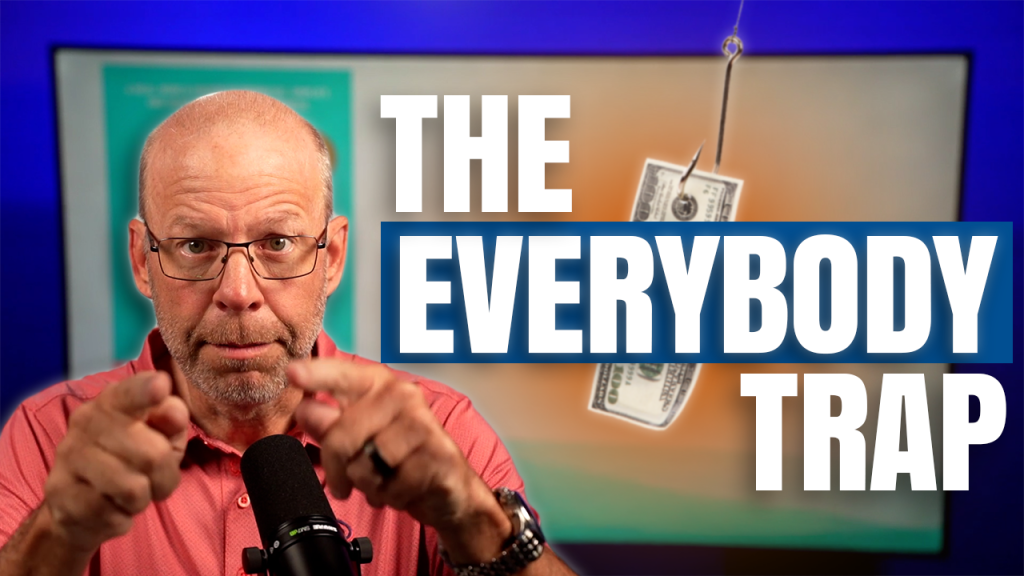
The fishing metaphor: Pick one problem. Write to that problem. If nobody responds, that's not the bait they want. Try another problem. Keep fishing until something bites.
Scott's ATV story: Didn't know why people wanted land in one area. Discovered buyers wanted to ride ATVs. Started writing to that. More ATV people came. Applied the same approach in Nevada—asked a truck driver why he was looking for land. Used that intelligence. It compounds.
The fix—four questions before you write:
- Who is this for?
- What do they believe?
- What are they afraid of?
- What words do they use?
When you put those four elements into your copy, more people like that begin to respond.
Got a business question? Ask Scott here: scotttodd.net/ask
📜 Full Transcript (Click to expand)
Josh sent a note. He has a question. And Josh's question is I keep writing ads, but I'm not getting leads. I've hired people to write the ads. I've read them and they're good.
I've tried different headlines, different angles, different platforms. My team says the ads are good. I don't have any leads. It's frustrating. I don't know what to do. All right, Josh. Welcome to Fix My Business. I'm your host, Scott Todd. I've built multiple seven-figure businesses after leaving corporate America, and this channel is.
Dedicated to helping you get unstuck from situations like this. So here's what's happening. Here's what's happening. First of all, the market is always talking to you. When we put ads and copy and marketing material out into the world, when we write stuff on our website, the world is listening, the world is reading, the world is responding. You can tell by the eyeballs that are getting on things. You can look at view counts.
And as long as you're getting view counts on there, the very next action says, are you getting them to convert into something more powerful, like leads? And if you're not, then you're missing them. They're talking to you. The audience is talking to you, but you may or may not want to listen. And that's the problem. And really what's happening here is that.
We we're we're writing our copy. But I can't I can't tell you because I haven't read your copy, but in most cases like this, you're writing your copy to everybody. It's to everybody. And it's not to one person. It's not to you, or it's not to the specific person that you're trying to attract. And you see, there's a difference when when we
Broadcast out a message, then we think in our minds, like, hey, this is this is going to capture everybody. It's like we think it's like throwing a fishing net into the ocean and we're going to catch some fish just swimming by. But with marketing, the more precise you can dial that in and get to that ideal dream customer, the better it's going to connect with somebody. I say it all the time that.
We don't just buy things randomly. We buy things to solve a problem, real or perceived. And your ad copy has to help the buyer understand that you are the solution to the problem that they're trying to solve. So it all begins with the customer's problem. One customer's problem. And you might say, well, Scott, how do I know exactly what that problem is? And
I love to tell this story. Like, there's 8 billion people on this planet, and there's 8 billion of us walking around with different stories in our head. And your job as a marketer is to figure out how you can capture in to just a small portion of those 8 billion narratives that's happening at any given time. And that's a job. It's it's a job. But you know what? Most of your customers are going to come down to solving.
Some core product problems. So when you think about it from that perspective, what are the core problems that my customer's trying to solve? And it can't be more than a handful of them. Now you pick one of those core problems and you write to that particular problem. And this is where we've talked about the traps. We've talked about the traps for weeks now. I've gone through every single trap because it's core to the framework. It's core to the framework that I use in my business and the framework that I help people.
kind of navigate through. And this is where the concept of the visibility trap comes in. The visibility trap is really about what happens when you lack data. You have no visibility into the the key insights of your business. It could be financial, it could be customer driven. So what happens is when we don't understand our customer, when we don't have that visibility, then what happens is we start to manage with our gut.
And we're often wrong within our gut. So what we have to go back and do is really try to think about who the customer is and what problem they're trying to solve. Now I've had people tell me, Scott, I have no idea what problem they're trying to solve because I'm new to this business. Or ⁓ you know, like I I I don't know, the world has shifted, and that's fine. That's fine. But what you have to go back to is you have to go back to the core fundamental understanding.
Of what potential problems they are, you got to throw some ads out there targeted to that one specific problem.
You have to try things. So if we get narrow focused and say, this is the one particular problem I'm going to try to see if it's like fishing. I'm going to use this bait. I'm going to throw out in the ocean. I'm going to reel it back in a few times. If nobody responds, if there's no fish that they don't like that bait, then I have to try another bait. I have to try another problem.
And this is where we start to approach this concept of like an invisible audience, because what happens is when we start to write to everybody, the person with the problem that we can truly solve, they they don't just don't respond because they're ignoring it, because it's not speaking to the voice that's in their head. So you gotta align the material, the copy that you're writing to one of those problems, and you gotta just keep throwing them out there. Just keep fishing. Okay.
Think about fishing. Okay, we're gonna be out there just gonna throw out all kinds of bait. And then when we have somebody that responds to a specific problem.
Then we're able to bring them in a little bit. We may not sell them. They may not convert into a sale, but now that we're talking to them, we can begin to understand the words that they use to identify their problem.
And when we do that, now what happens is we now have new data that we can put back out into the marketplace and start to catch more people like that. Let me give you an example. ⁓ back when when in one of my first businesses, it was in real estate investing, and it was in specifically I was investing in property in a specific area.
And what happens is I I didn't know why people would even want property in this area. I was just kind of guessing. And then one day I put a I put something out there. I acquired some piece of data somehow I can't remember. But it's like, ⁓ let me try that. And I put that out there and all of a sudden I started getting all these leads. Okay, I started getting more and more leads. And then what happened is I started putting that back out into the marketplace.
I started writing ads that targeted those people that were s responding to me. And those people were asking questions about writing ATVs in that specific area. So what I did was I started writing ads about writing, like, hey, you can ride your ATVs in this specific area. And what happened was I started getting more people who wanted to write ride their ATVs in this specific area. Then I took that idea, that concept, and I had some land ⁓ in
Nevada, northern Nevada, I couldn't figure out why people wanted to buy it there. And then what I did was I started asking people, like, ⁓ what do you do for a living? Why are you looking for land? And one guy tells me what he does for a living. He was a truck driver. He started telling me why he was looking for land. Guess what? That is intelligence, business intelligence. It removes the visibility trap. Now I'm able to use that information back.
Into the marketing material that I'm going to provide. I start attracting more people like him. And it compounds. Okay. So that's the fix, is we have to think about the one person that we're writing these ads to and the one problem that they're trying to solve. And we want to make sure that it's aligned with the one conversation that they can catch hold of.
That's already feeding into the conversation in their head. And marketing is hard. Business is hard. Right? Like I think that people don't under don't really anticipate just how hard business is, but it's something that you can do. It's something that you can overcome. And so really the practical step here is that I want you to, before you and your team write anything.
That you're going to put into the marketplace, what I want you to do is I want you to think about this. Who is this piece of copy for? What do they believe? And then last, what are they afraid of? And when you start to put that in, and what words are they going to use? And when you start to put those four elements back into the copy that you're producing, you're going to see that more people like that begin to respond.
That's how we become unstuck from this specific problem. Listen, if you have a business problem, if you're stuck on something, it can be big, small, it doesn't matter. I want you to head over to scott Todd.net forward slash ask. I'll take your questions. I read every single one of them. And I will see you in our next episode.