


Show Notes
Tony writes: "I found a deal, but I don't have the cash. Should I bring on a partner or borrow the money? How do you decide?"
The reframe: This isn't a finance question. It's a control question.
Borrowing (debt):
- You keep 100% ownership
- You owe payments regardless of performance
- Lender doesn't care if the deal works—they want their money back
- Risk: Deal fails, you still owe
When to borrow: When the cash flow covers the debt and you have confidence in the deal. If you're confident, you want full control.
Partnering (equity):
- You give up ownership and control
- No payments if the deal doesn't work
- Partner shares the risk—and the upside
- Risk: You're married to this person for the life of the deal
When to partner: When you need expertise, connections, or credibility—not just cash.
Scott's story: Considered a retail strip center. Talked to an experienced partner. Numbers didn't work. Walked away. Had the numbers worked, he would've partnered for the expertise.
The diagnostic question: Do you need capital—or capital and capacity? Cash only = borrow. Cash plus expertise = partner.
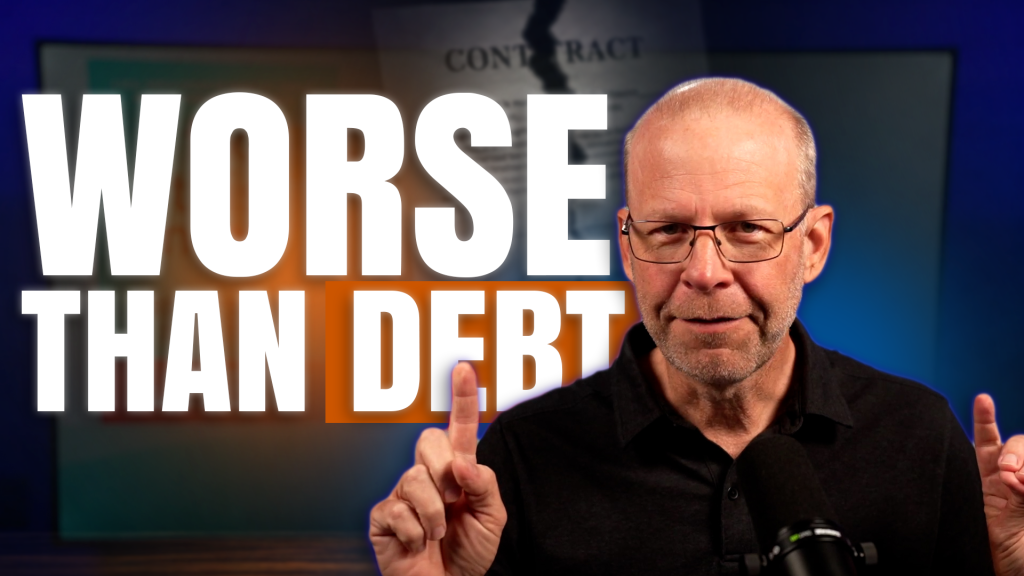
The warning: A bad partner is worse than bad debt. Debt ends when you pay it off. A bad partnership drags on for years.
Treat it like a marriage:
- Get to know them first
- Written agreements
- Exit terms, breakup terms
- "You need a prenup"
The close: "They're great until they're not."
Got a business question? Ask Scott here: scotttodd.net/ask
📜 Full Transcript (Click to expand)
You found a deal, but you don't have the cash. Do you partner or do you borrow the money? And this question comes from Tony. And Tony asks, I found a deal, but I don't have the cla cash to close it. I've been told I should either bring on a partner or borrow the money. I don't know which one to do. How do you decide? Tony, that is a great question. Congratulations on your deal.
Look, this isn't really a finance question. It's more of a control question. Because both options do have a cost to you. One of the options costs you some money and the other costs you some ownership. And so really when we're thinking about these two different paths, you know, we're talking about borrowing, which is obviously debt. And when we do that,
Well then ultimately you keep a hundred percent of the ownership.
Scott Todd (01:07.158)
But you also owe the payments regardless of the performance of the the deal. So the lender doesn't care if the deal works or not. They just want their money back with interest. That's the way that they want it. And if you borrow it, they're probably gonna make you sign a personal guarantee, which means that you are on the hook to make sure that they get their money back. That's just it. Okay. So ultimately the risk is that if the deal fails.
Well, then you still owe the money. And you should definitely consider the borrowing when the cash flow covers the debt. So think about that again. Let me say it again. When the cash flow covers the debt, well, then you should have the confidence in that deal. And when I have confidence in a deal, I want full control. Now, the flip side is partnering.
And when we partner, we give up equity. So borrowing, we we take on debt, partnering, we give up equity, which means that you give up some of the ownership either in your company as a whole or in that specific project or property. Okay. And when you give up ownership of it, you also give up control over it. Now, the good news is that obviously there's no payments if the deal doesn't work.
So when you bring on a partner, they share with you the risk, but they also share with you the upside. And the risk that you take on here is that basically you're married to this person for better or for worse, in richer or poor, for the entire life of the deal. Okay. Like you now have a significant other when it comes to this property. Now, when would I want to do that? Well, I would want to do that.
In a couple of different scenarios. Number one is where I need the expertise. Okay, when I need the expertise in something, then I want to consider a partner because they also get to share the risk with me. But they also help me in sharing the decisions. And when I do that and I give up this stuff, I'm getting somebody who has basically the confidence and the capabilities that maybe I'm missing. So as an example, many years ago I was looking at
Scott Todd (03:34.589)
I was actually looking at a retail development project. I I ultimately turned it down because I couldn't make the numbers work, but I was thinking, okay, well, do I go for basically borrowing the money, borrowing the capital or using my own capital for that and taking on all of the risk? Or was I looking at actually bringing on a partner who had done it? And I actually talked to a partner and said, Hey, this is what I'm looking at. And this is somebody that had built a lot of these retail strip centers.
Constantly. That's just what they did. That was their business. And I talked to them, I showed them what I had. I had the property under basically under kind of a due diligence period. And when we looked at it, the partner basically said, Yeah, the numbers aren't going to give us what we want. So, you know, had they given us what we wanted, it would have been great to go through that experience with a more experienced partner. But if I have all of the experience that I need, why would I bring on a partner?
Now there's other situations where you might want to, maybe there's some upfront money or something else that that changes the dynamics of that. But generally speaking, if it's just you and this is not your business in terms of like you're just not in the business of normally bringing on all these partners, I want to control it. I want to I want to make sure I'm controlling that component of it. Okay. So if you don't need the expertise and you just need the cash, well then why would you want to share the risk and the decisions with other people?
Okay, so really the question comes down to do you need capital or do you need capital and capacity? Because if you just need the money, then go borrow it. But if you need the money and the expertise, well then and the connections and the credibility and whatever else comes with working with a partner, then well then partner. But here's a warning for you a bad partner is worse than bad debt. Because look,
Debt ends when you pay it off. A bad partnership can drag on for years. Years. So what you want to make sure you're doing is you need to understand and do your own due diligence on this partner. That's critical to this entire deal because again, we talk about the four traps, the fourth trap being the visibility trap. And look, if you don't know what you need and you pick the wrong option, well, then you're gonna
Scott Todd (06:02.309)
Bring on a partner and you're gonna have this person in your world for a very long period of time, and they may not be bringing to you any more capability, confidence, partnership in terms of like connections, et cetera. They're just there to collect the money, and then you're gonna have like this bad feeling about it. So, really, what you need to think about first is what is it that you're looking for? So we have to define the gap. Cash only or cash plus something else. I've said it before.
Cash only, just go borrow it. Cash for expertise, then get the partner in there. Do your due diligence. And you have to understand something. You need to treat this like a marriage. You really do. Because they're going to be with you for a very long period of time. You want to get to know them before you just jump into a deal with them. You want to make sure you have written, written agreements. And it's not just for the happy path, like this is all the great stuff.
You need to build into these written agreements, exit terms, breakup terms. How do you get them out of your world?
How do you end the partnership? And I'm telling you, you need to solve that problem beforehand. Just like divorce attorneys would tell you that you need a whatever that premarital document it is. I can't even think about what it is right now. What is it? Premital, well, I don't know. Prenup. A prenup. Jeez, prenup. There you go. So just like you need a prenup, you better put that into your written documents from the get go.
Because you wanna I've heard so many stories about partnerships. they can they're great until they're not. All right. There you go. All right. appreciate the question. If you have a question, head over to Scott Todd dot net forward slash ask, and I will see you in our next episode.