


Show Notes
If you've added AI tools and feel busier than ever, it's not in your head. Researchers followed 200 employees at a tech company for 8 months after AI rollout. Expected: faster work, shorter hours. Found: work became more intense.
One engineer said: "You thought you'd work less. But you didn't. You worked the same or more."
Scott breaks down why this happens at three levels:
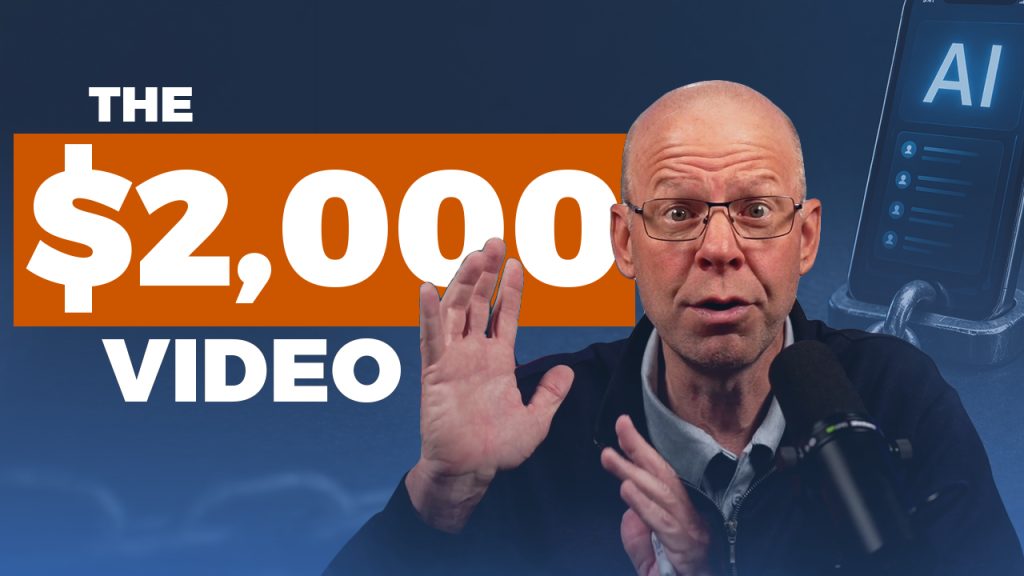
Scope Creep: AI gives you superhero capabilities. You take on work you never would have attempted. A friend edited his own video—took 2 hours. "That's the most expensive video your company ever produced. $1,000/hour times two hours equals $2,000."
Work Expansion: The barrier to starting a task dropped to zero. You can start something from your phone during lunch, from your couch at 9pm when your brain should be winding down. Work bleeds everywhere. Scott shares the BlackBerry story: standing at Haunted Mansion in 2008, watching a dad on his device, thinking "I can't wait to get mine." Then learning why they called it a crackberry.
Parallel Overload: Multiple tabs, multiple drafts, multiple workflows. You feel productive, but context switching drains you. The visibility of progress isn't actual progress.
The trap: AI speeds you up. That raises everyone's expectations—including your own. The new pace becomes the baseline. It's the AI grind culture.
Scott introduces AI Debt: the tool creates new capacity, that capacity becomes absorbed into new work, and now you can't run your business without the tool. Combined with building on rented land (Episode 49), you're layering risk on top of intensity.
The fix:
- Decision Pauses: Is this a task or a decision? Tasks → AI or your team. Decisions → you.
- Work Sequencing: One AI-assisted task at a time. Stop treating parallel threads as productivity.
- Human Grounding: Scheduled block with no AI. Whiteboard sessions. Walks. Protect your judgment.
Join the Wednesday Afternoon Off Crew: block it off, go enjoy the freedom your business affords you.
The bottom line: AI doesn't fix a broken process. It amplifies it. If you were overwhelmed before, AI makes you more overwhelmed. The system comes first.
Got a business question? Ask Scott here: scotttodd.net/ask
📜 Full Transcript (Click to expand)
If you've added AI tools to your business in the last year and somehow you feel busier than ever, I want you to know that it's not in your head. There's actual research on this. And I think it explains something that most AI conversations miss completely. Welcome to Fix My Business, the show that helps you grow and scale your business. I'm your host, Scott Todd. After becoming a vice president at a Fortune 300 company,
I've went on to build multiple seven-figure businesses, and the goal of this channel is to help you do the same. Now, here's the research, and I think it's important to share with you because I think it's going to tell you a lot about what's going on in your business. Researchers looked at a company with 200 employees. It was a tech company, and they followed these employees for eight months. And the driver for this was that they followed these employees after the company rolled out AI tools.
You might think a tech company, AI tools, yeah, that sounds like a winning formula there, right? Well, what the researchers expected is that they would find people who finish their jobs faster. They would do more with less. And you know what? They'd probably find the people that were cutting hours. That's what they thought they were going to find. But what they actually found is that AI consistently made the work more intense. More intense.
Okay, and here's what I found interesting is that one of the engineers in the study basically said, and this is right from the report, he said, you thought maybe because you could be more productive, you've saved time, work less, but you didn't work less. You just worked the same amount or even more. Now that's coming from a tech company. And many of you are like, well, I'm not a tech company and I don't have 200 employees. And I hear you.
but I see the same thing happening even with business owners, even people that I know that running businesses, I see the same thing. And here's what's happening. And it's coming at us from three different levels. First, it's coming at you from scope creep. And what I mean by that is that AI, AI makes tasks and completing tasks more accessible than ever before. All of a sudden, we now have this superhero capabilities that like, man, we can just become Superman and do.
anything that we couldn't do before. Okay, like this is real. Okay, I'm sure that you feel that way too. You now have newfound capabilities. And let me give you a real life example, okay? A friend of mine ⁓ owns a company. He's got, I don't know, 30 employees, something like that. He has video editors, a video team that's doing work for him. He is not one. His business is not video editing. But what happened was,
his team asked him for video. He had read about this new skill that would essentially make the video editors disappear. In fact, look, I'm so tired of seeing these people on YouTube and Instagram that are like, this skill just killed all the need for the editors. No, it didn't. No, it didn't. It's hype. It did not. It didn't. But anyway, what he did was he loaded this skill in and he basically went and edited his own video. Okay.
Now, he told me about this. He's like, man, it was so easy. It took like two hours. And that's what I like paused. And I looked at him and I said, wait a minute, it took you two hours. Like, yeah, well, you know, I was prompting, I was doing this stuff. And I kind of started laughing. And I said, that is the most expensive video your company has ever produced. Now think about it for a minute.
If his time was worth even $1,000 an hour, that video cost him $2,000. And where the real crime in this thing comes in to me, and look, I see this in a lot of companies, so I'm not, I see it in myself, so I'm not throwing stones here. I see it in myself. It's easy to go do these things, but the time would better be spent.
with taking that same skill and grabbing your video editor and saying, come here, let me show you something. Let me show you, let's experiment with this together. You see, the research, other research shows that 67 % of business owners, leaders are spending two hours a day with AI, two hours a day, while 28 % of employees are. So there is a curiosity gap between leaders
and actual task workers on the work that they're doing with AI. As leaders, we need to now take this and teach our people on how to do what we're learning how to do so that they can be more productive, but not us. Okay? So because we now have these new capabilities, what those researchers found is that you're more likely to take on more work that you would have never have attempted to in the past.
Right? So that's the first one, scope creep. The second one is ⁓ work expansion. And this one is somewhat sneaky because look, AI reduces a lot of the friction of just starting something. So back in the old days before AI, if you wanted to do something, you had to actually sit down and think about it. Okay? So if you were going to write a proposal to some company, well, then you had to sit down
and write that proposal. You had to do the work. There was a setup time that was required, and that setup time created a natural pause, and that pause was a boundary. It was a boundary between this work and that work, okay? But what AI has done is AI has allowed it so that you can start a task from your phone during lunch in the pickup line. Or worse, you can sit on your couch
at 9 p.m. and start something when your brain should be trying to go to bed, right? Like we should be in wind down mode at nine o'clock, but we're not. See, the barrier to entry has dropped to zero. So work bleeds into everywhere. It reminds me of this personal story that I have. mean, back in 2008, I had been promoted.
in my corporate 300 company, I've been promoted and I was moving to Orlando. And my family and I, we were at Disney World and we were in line at Magic Kingdom. And one of the perks of my new job was that I was going to get a BlackBerry. And I call it a perk because at the time I couldn't wait to get it. It was my status symbol, right? Like it was my trophy for making it.
that's in my mind. was like, man, I'm going to get this Blackberry. It's going to be so cool because all the important people had Blackberries at the time. So I'm standing in line at the ⁓ Haunted Mansion there and there was a dad in front of me with his kids there. his kids are there and they're like playing in line and he's bored. So he's on his Blackberry answering an email or doing whatever he was doing.
And I'm standing behind them and I'm looking at this and I'm thinking like, man, I can't wait to get my BlackBerry. Again, it was my achievement trophy. Okay. Like it meant it was a status symbol to me. Well, I quickly realized why they called that BlackBerry a crackberry. I quickly realized why they called it a digital leash. And this, this idea or this concept of like, Hey, we can work everywhere. Just because we can doesn't mean we should.
Okay, like our mind needs these breaks. And if you run a business, you've to cut yourself a break and like give yourself a break, okay? So look, the temptation is to work more because it's easy and that's what we want to try to avoid, okay? The third problem with AI is the parallel overload. And what that means is that because AI is moving so fast, it allows us to open up multiple tabs and multiple tasks at one time.
And what's happening is in this tab, we've got like a draft going, we've got something else happening in another tab, we've got a workflow being built in a third tab. And look, you look at this, you're like, man, I am getting, I am crushing it, man. AI is just like producing all this stuff for me. But the actual concept of context switching constantly is essentially basically draining you. Okay? Like it's creating a cognitive load.
that wears you out. You're exhausted by the end of the day. look, I'm making all this progress, but you're not making progress because it's like this visibility progress that you're making, but you're wearing yourself out. And the ideas probably aren't as great as if they were actually coming from your brain. Now, here's the trap. Here's the trap that all businesses are going to fall into, and I already see it, is that AI speeds you up.
you're able to do something faster. about the guy that I said made the video, okay? Like he edited his own video. He basically said like, man, that would have taken me a week to get done with my own team. Okay, that's true, okay? Because there's a pipeline and everything like that. But now because he can do it in two hours, by him doing it himself, it moves it along faster.
And now what happens is that raises everyone's expectations, including your own, because you can do it faster. Everybody else feels like they need to do it faster. And all of a sudden we rely more and more on AI, which continues to expand. And because you can do these things that you never did before, your scope of what you do continues to expand. So the role of a business leader, the role of an entrepreneur,
your role is going to get larger because you now have these newfound capabilities. And guess what? That makes everything more intense. Okay? The new pace becomes the baseline. It's the new grind and hustle. And if you've been around this channel for any period of time, you know I can't stand the grind culture. I think it's the worst thing ever. Now we got the AI grind culture. It's terrible.
And happens is businesses when they're stuck below, and I say stuck, when businesses are below, let's say, $3 million, what happens is they're often get stuck in what I call the muddy mile. And one of the key things I talk about when I talk about the muddy mile is this concept of operational debt. Operational debt is the accumulated cost of all of the patches that we do. So look, most businesses, when they have a problem, they create a patch.
We miss this. So what do we do? We create a checklist. ⁓ this happened. We're going to patch it with this as opposed to getting to the root cause. And not only does that happen within the business increases operational debt, but the other part of operational debt is what I would call AI debt. And what that looks like is the fact that we're layering in these tools and the tools create these new capacities in your job.
The new capacity gets absorbed into the new work that you do, and now you can't run your business without the tool. Think about that one for a minute. You can't run the business without the tool. A couple of episodes ago, I talked about how a lot of businesses are building their businesses on rented land. the concept of that video was that when you build your workflows on an AI model, you become basically subservient
to that platform, to that model. And in the age of companies being just like deplatforming you and making your account just go away, that's a big risk to put onto your business. And in fact, it's funny because just yesterday I heard about a case where this 14 employee company in Brazil, essentially they had built the entire business on Anthropic. like the whole thing was there. And what happened was they lost
their account. lost their anthropic account and it was shut down and they basically said, well, we can't function. They shut down their company until they got their account back. I mean, they built their business on rented land. They proved my case right there a couple of episodes ago. And if you didn't see it or didn't listen to it, go watch it. It's basically called built on rented land. And that's what we're trying to avoid here. OK, so what's the fix? What's the fix? Well,
The researchers, they proposed something that they called an AI practice. And that sounds very academic. So let me translate it because I don't like the academic side of it. And what they said was that what we need to make sure we're doing is that we need to make sure that we give ourselves decision pauses. And what that means is that before you use AI on something, I want you to mentally think for a second. Is this a task or is it a decision?
Because if it's a task, okay, let the AI handle it, right? okay, let the AI handle it. Or better yet, if it's a task of someone on your team, let them handle it with AI. Teach them. Don't do it for them. But if it's a decision, you've got to pull that back. Because decisions require your judgment. So don't let the AI get to your decision making. You still need to control that. Second thing is work sequencing.
Instead of trying to multitask within the AI, if you're going to leverage AI, leverage it on one task at a time, one assisted task before we move on to another task. So we have to stop treating this as parallel threads and parallel threads as productivity because it's not. And then the third one, which I think is the most important part, is human grounding. What I want you to do...
is I want you to keep a scheduled block in your week that is not anything to do with AI. Maybe it's a call with a client. I love to go into the conference room and draw different ideas on the whiteboard. I call them whiteboard sessions. Maybe you want to go for a walk where you're like, OK, I'm not going to do anything with AI on this walk. Because what that does is it protects your judgment. And that's the most important part. In fact, if you own a business, what I really want you to do
If you own a business, I really want you to do is I want you to join my Wednesday afternoon off crew. You're like, what do I got to do for that? You don't have to do anything for it. There's no, you're in when you do one simple thing and that's to block off a Wednesday afternoon off your calendar. I did a video about that a few weeks ago where I want you to block off Wednesday afternoon, go enjoy the freedom that your business affords you by going and doing something that you want to do. For me, the last few weeks has been playing golf and
Get out of the office and free yourself. Go enjoy the freedom that your business affords you.
Look, the underlying issue here is the same thing that I talk about for automation and the fact that AI doesn't fix a broken process. It doesn't fix a broken system. It simply amplifies it. So if you were overwhelmed before AI, well, AI is going to make you more overwhelmed. You have to remember this. This is so important. The system comes first. It always comes first. And whatever tool you're using in your business, it just becomes a multiplier.
Okay? So here's what want you to do. If you have a question that you want answered, head over to scottodd.net forward slash ask, and I will see you in the next episode.